


Walking route
Through the Makegem forests.


This walk, situated on the border between the Ghent outskirts and the Flemish Ardennes, takes you from picturesque Munte to the charming town of Bottelare, following quiet paths. Afterwards, you'll discover the Makegem woods, a place where history and nature seamlessly intertwine.
Distance: 11 km.
Time: 3h00.
Grade: Moderate.
Type: Circular.
Gps Track: Yes.
Route description: Yes.
Wheelchair: Not suitable.
Dog: Allowed on leach.
Height gain: 90 meters.
Trail: Paved and unpaved.
Marking: See PDF route description.
Hiking shoes recommended.
Nature and history.
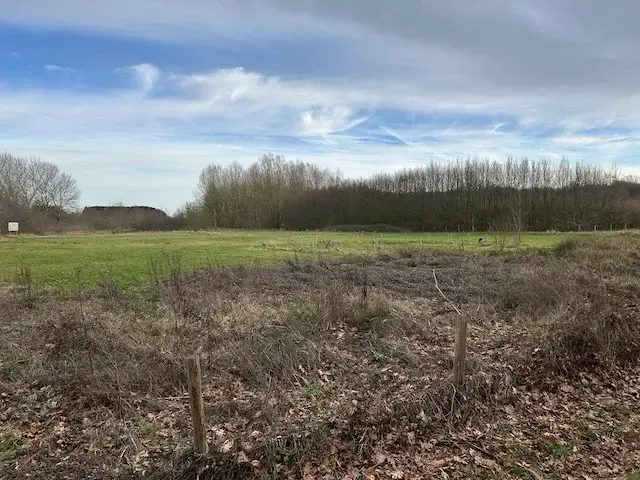
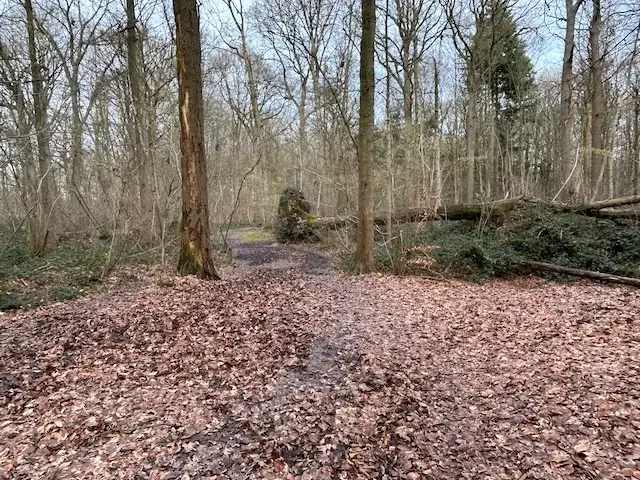
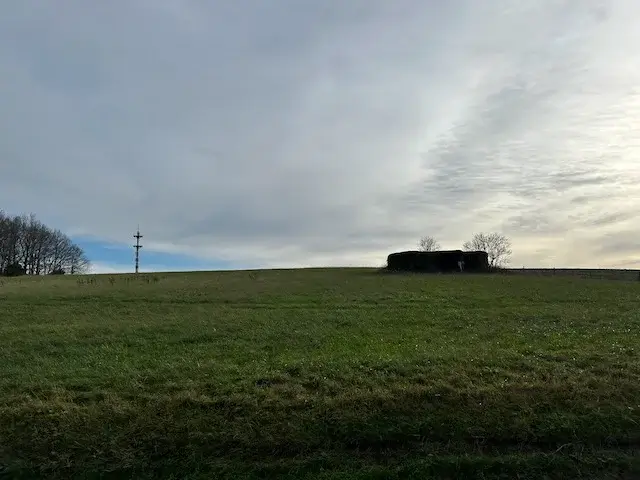
The walk leads from Munte along paths to Ter Zinkt Castle. This moated castle is hidden in the greenery and can unfortunately only be admired from the outside. A little further on, you'll pass the house with the inscription "Den Doel" on its roof. Like the surrounding woods (the Heilig-Geestgoed), this farm had strong ties to the Ghent "Heilige Geesttafels" (Holy Spirit Tables). The proceeds from the farmland and the lease were used to support the poor in the city of Ghent. It was therefore a crucial link in early social care. Via quiet roads, you walk to the center of Bottelare, where St. Anne's Church immediately catches the eye. Bottelare has been a place of pilgrimage for St. Anne for centuries. It all began around 1580. According to tradition, a miraculous statue of St. Anne was found in a hollow oak tree on a hill in Bottelare. As is the case with legends, people tried to move the statue to the parish church, but the next morning it was always returned to its original spot in the woods. This was seen as a divine sign: Saint Anne wanted to be worshipped there. A chapel was built (the current St. Anne's Chapel), and the flow of pilgrims began. After leaving the village, walk towards the Nerenbos. Here you'll walk among stately beech trees. In spring, the ground here is often transformed into a white carpet of wood anemones. The route continues towards the Bruinbos, a slightly wilder natural area where the elements are left to their own devices. A wide boardwalk leads you through the woods, but in wet weather you'll encounter some mud. A quiet road leads you to the last wood, the Heilig-Geestgoed (Heilig-Geestgoed). The name alone captures the imagination. This woods used to belong to the Ghent "Heilige Geesttafels" (Heilige Geesttafels, the predecessors of the Public Centre for Social Welfare). Today, it's primarily an oasis of tranquility where, with a bit of luck, you might spot a deer. Once you emerge from the forest, you'll have a beautiful view of rolling hills and the MU25 bunker. The bunkers in Munte are part of the Ghent Bridgehead (also known as the Tête de Pont de Gand). This was a defensive line of no fewer than 228 bunkers built between 1934 and 1935 to protect the city of Ghent from enemy invasion. Munte was a crucial point in this line because of the Munteberg. This elevated position offered a strategic view of the entire region, making it an ideal spot for observation and defense.
Download PDF for route description and map.
The paths in the Makegem woods can be quite muddy after a rain shower. Sturdy, waterproof hiking boots are a must, not a luxury!



Walks East Flanders.


